
Get the Moss Off Your Roof
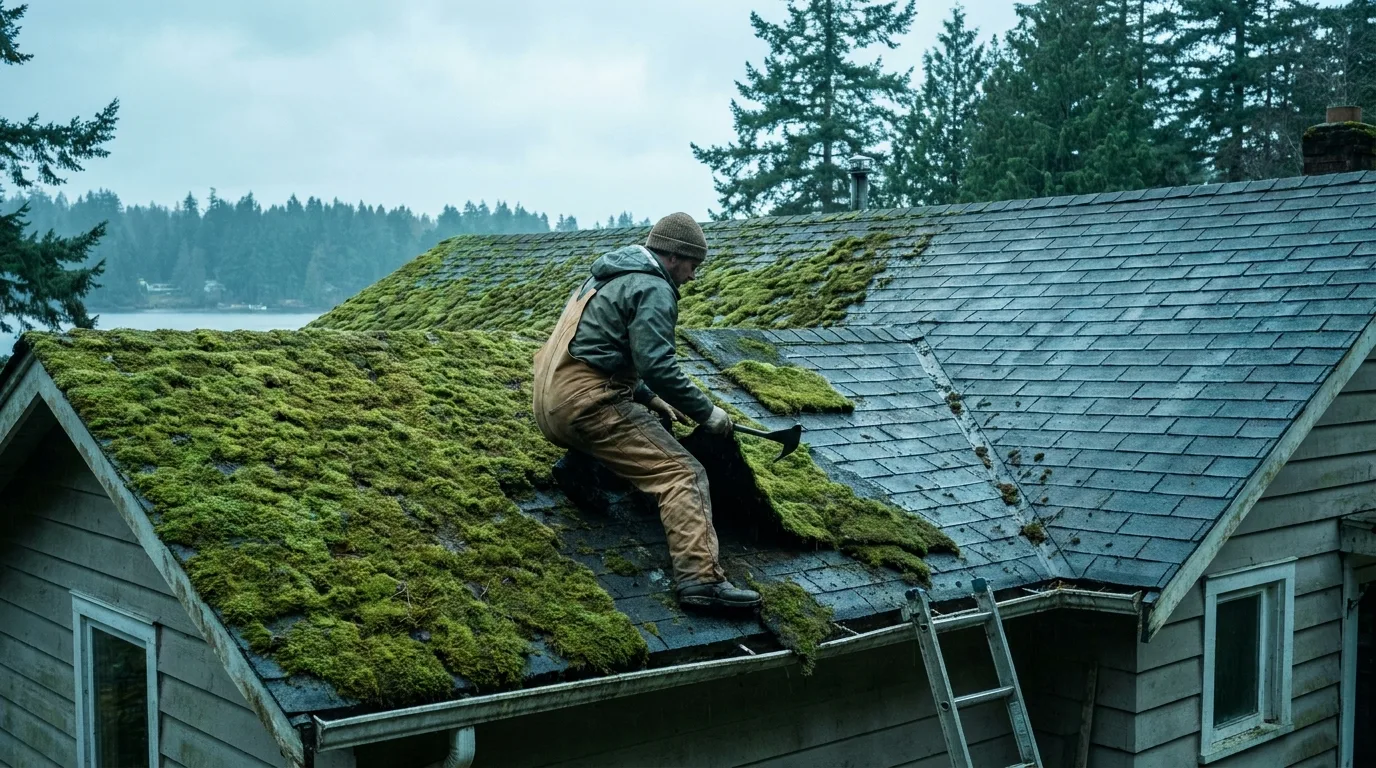
Moss does not sit on shingles, it grows into them. Left through a few Island winters it lifts the edges, holds water against the deck and quietly turns a roofing problem into a framing one.
Moss is the single most damaging thing growing on a mid-Island roof. Algae stains. Lichen marks. Moss actually gets under the roofing and lifts it, and once it has done that, water follows.
Here is what is happening up there. Moss anchors with rhizoids — fine root-like threads that push into every seam, crack and gap they can find. On an asphalt roof that means the leading edge of each shingle. As the mat thickens it wedges the shingle edge upward, breaking the seal that holds the course flat. Now there is a gap. Wind-driven rain, which we get plenty of here, goes in through the gap instead of running over the top.
And moss holds water. A saturated moss mat keeps a permanent damp patch against the shingle and the deck beneath it. Roofing is designed to shed water quickly, not to stay wet, and a surface that never dries out ages far faster than one that does. On cedar shakes the effect is worse again — trapped moisture is exactly how shakes rot.
Why it happens so fast here
Shade and moisture, which describes most of Vancouver Island between October and April. Any roof with fir or cedar overhanging it, any north-facing slope, any valley where needles collect: those are the spots where moss starts. It rarely takes over the whole roof at once. It begins as small dark clumps along the shingle edges and in the valleys, and it spreads outward season by season.
Left alone across several wet winters the mat thickens, the lifted edges multiply, granules wash off with every rain, and eventually you are dealing with leaks and replacement rather than cleaning.
How we remove it
Removal is deliberately gentle and deliberately slow. We work from the top of the slope downward so we are never dislodging debris onto a section we have already cleared, and we take the moss off with hand tools and soft brushing — no scraping across the grain of the shingle, no wire brushes, no high-pressure wand.
That last point matters more than anything else on this page. High pressure will absolutely remove moss. It will also remove the mineral granules that protect the asphalt from UV, and those granules are the shingle's lifespan. Roofs blasted clean look great for a season and then age extremely quickly. Every roofing manufacturer says the same thing about it.
Thick, well-established mats sometimes cannot be fully removed in one pass without damaging the roof underneath. When that is the case we take off what comes away safely, treat the remainder, and let the dead residue weather off over the following months. That is the honest answer, and it is better than the alternative.
Treatment and regrowth
After the physical removal we apply a moss treatment across the roof. This kills off the spores and fragments left behind in seams and under the shingle edges — the pieces you cannot see and cannot pick out, which are exactly where regrowth starts.
Nothing is permanent. Moss spores are in the air constantly on this coast, and a shaded roof under trees will start again. What treatment does is reset the clock and slow the process down, and the difference between a treated and untreated roof over a few years is substantial.
You can help. Trimming back branches that overhang the roof cuts both the shade and the constant drop of needles and organic debris that gives moss something to root into. Keeping the gutters clear stops debris backing up onto the lower course. Neither is glamorous and both make a real difference.
Timing it right
Late spring through early autumn is the practical window, when there are enough dry days to work safely and the treatment can do its job. Removal in the depths of a wet winter is difficult and a lot less effective.
The best time to book is the season before you think you need it. Moss you can see clearly from the driveway has usually been up there a while.
Booking it
Gutters get done at the same time on most moss jobs — everything we take off the roof has to end up somewhere, and that somewhere is your gutters. We will always tell you honestly what shape your roof is in. If it is near the end of its life, cleaning it is not the right spend and we will say so.
We cover Nanaimo, Lantzville, Nanoose Bay, Cedar, Parksville, Qualicum Beach, Ladysmith, Chemainus, Errington and Coombs, Monday to Friday, 9:00 AM to 5:00 PM. Quotes are free.
We take moss off by hand and brush rather than blasting it, because the pressure needed to shift a thick moss mat is exactly the pressure that strips shingle granules and voids roofing warranties.
What You Get From Roof Moss Removal
Established moss mats removed before rhizoids lift your shingle edges
Hand and soft-brush removal — no high-pressure blasting, no granule loss
Treatment applied afterwards to kill residual spores and slow regrowth
Valleys, ridges and shingle edges cleared, not just the open field of the roof
Trapped moisture removed from against the deck and the shingle underside
Honest assessment of whether your roof is worth cleaning or past it
Debris cleared off the roof and out of the gutters, not left in the troughs
Seasonal timing advice so the treatment gets a fair chance to work
Treated and weathered off rather than scraped or blasted
Brushing worked down-slope so nothing is driven under the shingle laps
Gutters and valleys cleared of what comes down
An honest read on whether the roof is worth treating at all
What Roof Moss Removal Covers
Moss is the single most destructive thing that grows on a roof here. It holds water against the shingle, it lifts the edges as it thickens, and the rhizoids work into the mat itself so that pulling a clump off takes granules with it. Removal is deliberately slow: the moss is treated, left to die, and allowed to weather off over the following months. Anyone offering to scrape or blast it clean in an afternoon is selling you a tidy roof today and a shorter roof life.
How Roof Moss Removal Works
Assess the roof
We check the roofing type, its age and condition, how thick the moss is and where it has taken hold, then talk you through what is realistically achievable.
Set up safely
Ladders positioned, downspouts and landscaping below the working area protected, and access routes planned so we are not tracking debris across cleared sections.
Remove the moss
Working top-down with hand tools and soft brushing, we lift the moss mats out of the valleys, off the shingle edges and away from the ridge line.
Apply treatment
A moss treatment goes over the roof to deal with the spores and fragments left in seams and under shingle edges where nothing can physically reach.
Clear the fallout
Gutters, downspouts, the roof surface itself and the ground below get cleared of everything that came down, and we walk the result with you.
The Method, in Short
Work out how much life is left
Heavy moss on a roof already near the end of its service life is a different conversation from moss on a roof with fifteen years in it. That gets said before any work is quoted.
Clear the loose material by hand
Thick clumps come off gently with a soft brush worked down-slope, in the direction the shingles lap. No scraping, no pressure, and nothing worked uphill under the tabs.
Treat what is left in place
The remaining moss and its root structure are treated where they sit. Killing it matters more than removing it, because dead moss releases its grip and weathers away on its own.
Clear the gutters and check the valleys
Dislodged moss ends up in the gutters and the valleys, and leaving it there simply moves the problem downstream into a blockage.
What It Costs
Priced on roof area, pitch, how safely it can be accessed and how heavy the growth is. Steep and slick changes the job considerably. Quotes are free.
Roof Moss Removal by town
Tree cover, exposure and housing age change what this job actually takes. These cover it town by town.
Book Your Roof Moss Removal
Tell us about the job and we'll send you a free, no-obligation quote for roof moss removal.
Roof Moss Removal Questions
Late spring through early autumn, when there is enough dry weather to work safely and for the treatment to take hold. Moss is at its thickest coming out of winter, so booking in spring or early summer catches it at the right point.
That depends almost entirely on shade. A roof with fir branches overhanging it will start showing regrowth much sooner than an open, sunny one. The treatment slows the process considerably, and trimming back overhanging branches slows it further.
It can, indirectly. Moss wedges the leading edges of shingles upward and breaks the seal that keeps each course lying flat. Wind-driven rain then gets in under the lifted edge instead of running over it. Add years of moisture held against the deck and the roof structure suffers.
Neither. Scraping tears at the shingle surface and high pressure strips the protective granules that determine how long an asphalt roof lasts. We use hand removal and soft brushing, then let the treatment handle whatever is left embedded in the seams.
Because the moss and the shingle surface are bonded, and force separates them by taking the granules. Those granules are the layer that protects the asphalt underneath from ultraviolet light — losing them is what ages a roof. Treating the moss and letting it weather off looks worse for a few months and leaves the roof in far better shape than a roof that was cleaned to look immediately perfect.
Usually a matter of months rather than days. The moss browns off within a few weeks of treatment, then rain and wind carry it away gradually. On a shaded slope with a heavy growth it can take a full wet season to clear completely, which is worth knowing up front so the pace does not look like a job left unfinished.
You Might Also Need
Roof Cleaning
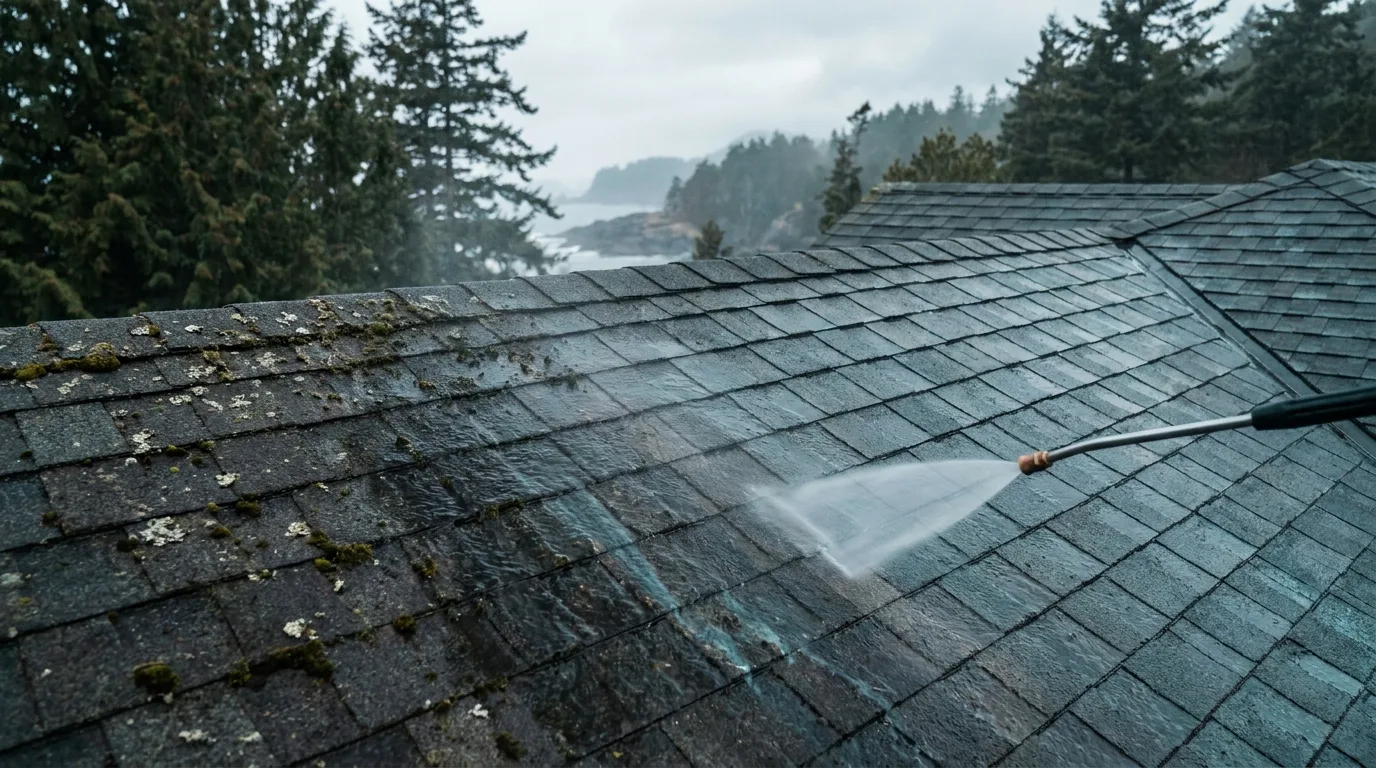
A full low-pressure soft wash of your roof surface, clearing black algae streaking, lichen and years of general soiling without ever putting high pressure on the roofing.
Learn more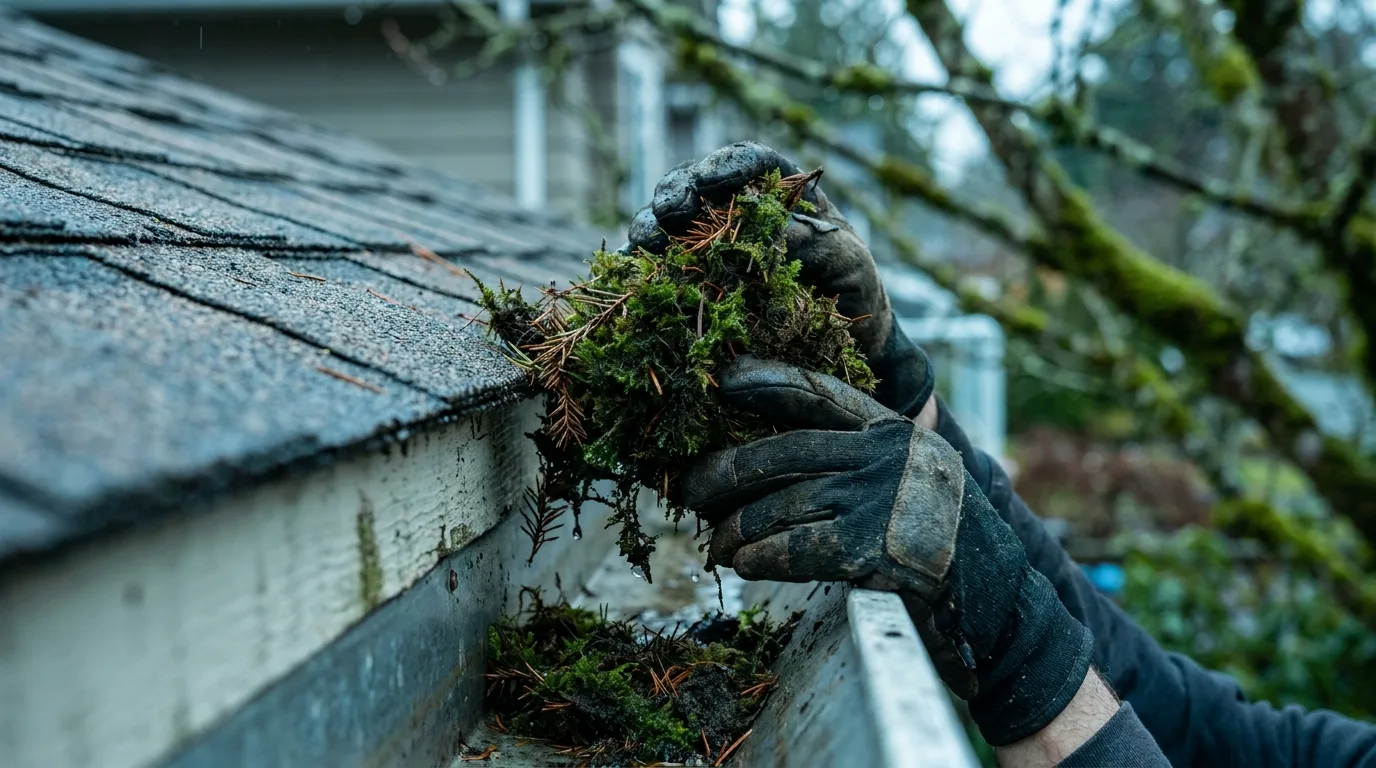
Gutter Cleaning
Hand clearing of gutter troughs, flushing of every downspout and outlet, and a flow check before we leave, so rainwater goes where it was designed to go.
Learn more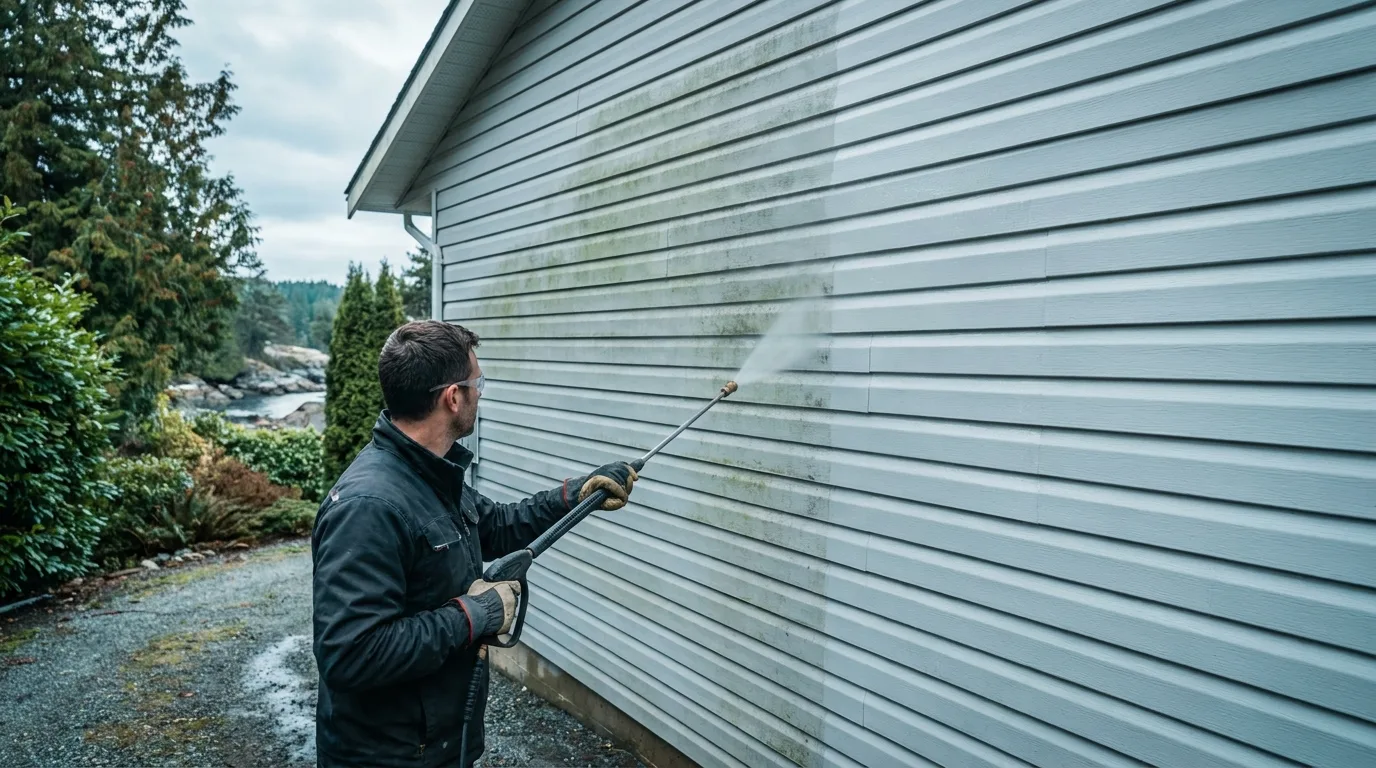
House Washing
A full soft wash of your home's exterior walls, soffits, fascia and trim, lifting algae, mildew, cobwebs and road film without forcing water behind the cladding.
Learn moreReady for a Price on Roof Moss Removal?
Tell us the size and condition of what needs doing and we'll cost it out.