
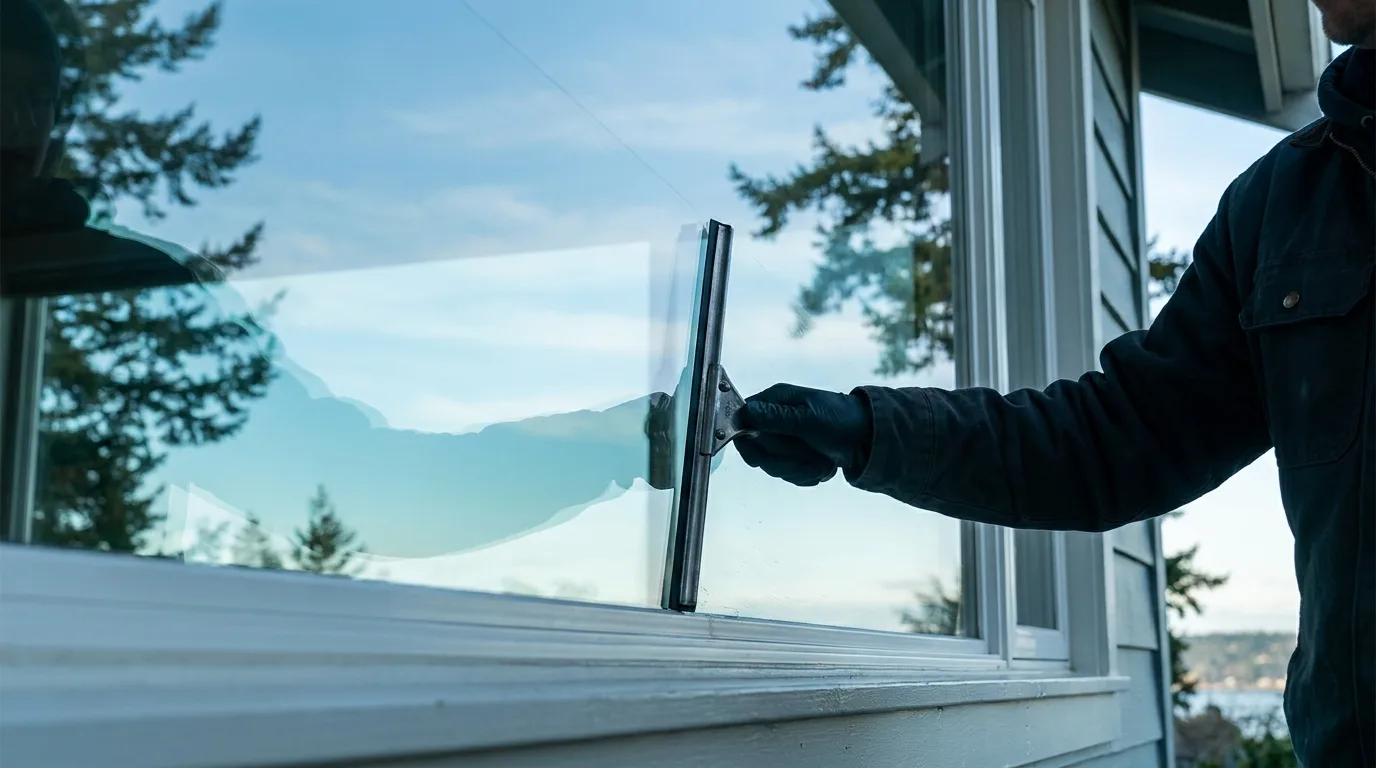
Streak-Free Window Cleaning
Glass is the one surface where a rushed job is instantly obvious. We do the panes, the screens, the tracks and the sills, so the whole window is clean rather than just the middle of it.
Clean glass is the difference between a bright room and a dim one, and most people underestimate how much light their windows are losing until the job is finished and the difference is sitting in front of them.
Windows on Vancouver Island collect a particular mix. Rain carries dust and pollen down the pane and leaves it in drying streaks. Sprinklers and irrigation spot the lower panes with mineral deposits. Homes anywhere near the water pick up a fine salt film that hazes the glass and dulls it in low winter light. Fir pollen coats everything for a few weeks each spring. And roof runoff carries shingle grit and organic residue down over the upper windows every time it rains.
The parts nobody cleans
Screens. A window screen is a dust filter you never change. It traps everything blowing past the house, and a clogged screen cuts visible light noticeably and holds moisture against the frame. We take screens out, wash them properly and put them back — we do not squeegee the glass around them and hope.
Tracks. The bottom channel of a sliding window or patio door accumulates grit, dead insects, needles and a black sludge that turns to paste when it gets wet. It is unpleasant, it wears the rollers, and it is right at eye level when you open the window. Tracks get cleaned out.
Sills and frames. The horizontal ledge below the glass collects standing water, dirt and often a line of mildew, especially on shaded elevations. Cleaning the pane above a dirty sill just makes the sill more obvious.
Hard water and salt
Mineral spotting is not dirt. Those white or cloudy rings on the lower panes are mineral deposits left behind when sprinkler or irrigation water evaporates on hot glass. Ordinary cleaning smears them around. They need a dedicated mineral treatment and some patience.
Be aware of the limit. Mineral deposits left on glass for years will slowly etch into the surface, and etched glass is physically damaged, not dirty — nothing will restore it. We can tell you which you are dealing with, and if a pane is etched we will say so rather than charging you to try.
Salt film on coastal-facing windows responds well to cleaning but comes back faster than inland grime. Homes with direct water exposure usually want their glass done more often, and it is worth knowing that going in.
Interior, exterior, or both
Exterior only is the most common booking, and it delivers most of the visible improvement. Interior glass is available too, and we work clean indoors — shoes off or covered, sills wiped, no drips left on the floor.
One caution about doing only one side. If a window has been cleaned outside and not inside, every remaining mark shows through and it can look worse before it looks better. If you want the full effect, both sides is the answer.
We also do skylights, sunroom and conservatory glass, French and patio doors, and glass railings and balcony panels, which pick up salt spray and water spotting faster than almost anything else on a house.
The order of operations
Windows go last in any multi-service visit. Wash a house or clean a roof after doing the glass and everything you just cleaned gets re-splashed with dirty runoff. So the sequence is roof first, then walls, then gutters, then glass. If you are booking more than one service we will lay out the order when we quote — it is not fussiness, it is the only sequence that gives you a clean result.
How often
Twice a year suits most homes here: after the spring pollen has finished falling, and again in autumn before the light gets low and you start noticing every mark on the glass. Waterfront homes, houses under heavy tree cover and anywhere with irrigation hitting the windows generally want it more often.
Access and what we need from you
Most homes here are one or two storeys and everything is reachable from ladders. Where a pane is genuinely unreachable safely we will tell you at the quote rather than attempting it — nobody benefits from a risky ladder position. Inside, we need a clear path to the windows, so pulling blinds up and moving anything fragile off the sills before we arrive speeds the job up considerably.
Tell us about any cracked or failed panes. Glass that already has a chip, or a double-glazed unit whose seal has failed and fogged between the panes, is worth pointing out. Cleaning will not fix a failed seal, and we would rather know about a crack before we work near it than after.
We clean windows across Nanaimo, Lantzville, Nanoose Bay, Cedar, Parksville, Qualicum Beach, Ladysmith, Chemainus, Errington and Coombs, Monday to Friday, 9:00 AM to 5:00 PM. Quotes are free.
Most of the visible grime on a window is not on the glass at all — it is in the tracks, on the sills and in the screens, so we clean the whole unit instead of squeegeeing the pane and calling it done.
What You Get From Window Cleaning
Streak-free exterior glass, with interior available on the same visit
Screens removed, washed and refitted rather than worked around
Sliding window and patio door tracks cleared of grit and sludge
Sills and frames wiped down, including shaded-side mildew lines
Hard water and irrigation spotting given a dedicated mineral treatment
Coastal salt film cleared from waterfront-facing glass
Skylights, sunrooms, French doors and glass railings included
Scheduled last in a multi-service visit so nothing re-splashes the glass
Hand washed and squeegeed, with no pressure near the seals
Frames, sills and tracks cleared before the glass is touched
Edges and corners detailed, where streaks always start
Checked in raking light rather than face-on
What Window Cleaning Covers
Glass is the last thing that shows on a clean house and the first thing anyone looks through. Exterior window cleaning is a hand job rather than a pressure job — a pressure washer near a seal or an older single-glazed pane is asking for a leak or a break. Frames, sills and tracks matter as much as the glass itself, because that is where the grit sits and where the next set of streaks comes from.
How Window Cleaning Works
Count and check
We go around the property counting panes, noting access, checking for hard water spotting or etching and identifying anything that needs special handling.
Screens out
Screens are removed, labelled where needed, and washed separately so both they and the glass behind them can be done properly.
Tracks and sills first
Grit, needles and sludge come out of the tracks and the sills are wiped down before any water touches the glass.
Wash the glass
Panes are washed and squeegeed to a streak-free finish, with mineral treatment applied first to any hard water spotting.
Refit and check the light
Screens go back, edges and corners are detailed, and we look at the glass from inside and out to catch anything the light picks up.
The Method, in Short
Clear the frames and tracks first
Sills, tracks and frame channels are brushed and cleared before any water touches the glass. Cleaning glass above dirty tracks just moves the dirt back onto it as it dries.
Wash the glass by hand
A solution and a scrubber loosen the film, worked into the corners and along the edges where it always builds heaviest.
Squeegee and detail the edges
Overlapping squeegee passes, with the perimeter and corners finished by hand — that edge line is the difference between clean glass and glass that looks clean until the sun hits it.
Check it from the angle you look through it
Each pane is checked in raking light rather than straight on, because a film or a missed streak is invisible face-on and obvious at an angle.
What It Costs
Priced per pane or by the number of windows, with upper storeys and fixed picture windows counted separately. Screens and tracks can be included. Quotes are free.
Window Cleaning by town
Tree cover, exposure and housing age change what this job actually takes. These cover it town by town.
Book Your Window Cleaning
Tell us about the job and we'll send you a free, no-obligation quote for window cleaning.
Window Cleaning Questions
Yes, if you would like it. Exterior-only is the more common booking and gives most of the visible improvement, but doing only one side leaves the marks on the other showing through. We work clean indoors — sills wiped, floors protected, nothing dripped.
They are part of how we quote a window job, because a clean pane above a filthy track does not look finished. If you want glass only, say so and we will price it that way.
Usually. Those are mineral deposits from sprinkler or irrigation water and they need a specific treatment rather than ordinary cleaning. The exception is glass that has been spotted for years and started to etch — that is physical damage to the pane, and we will tell you rather than take your money trying.
After, always. Roof first, then the walls, then gutters, then glass. Cleaning the windows before the siding means dirty runoff lands straight back on the panes, so if you are booking more than one service we will set the order out for you.
They should not be. Pressure at a window drives water past the seals into the frame and, on a double-glazed unit, past the perimeter seal into the cavity — where it fogs and cannot be removed without replacing the unit. Older single glazing and aged putty are simply fragile. Exterior glass is washed and squeegeed by hand for a reason.
Screens should be taken out and washed separately, and it is worth doing at the same time. A screen holds a surprising amount of fine dust, and leaving a dirty screen in front of clean glass means the first rain washes that dust straight back down the pane. Cleaning the glass and reinstalling a dirty screen undoes half the work.
Usually because the edges were not detailed, or because the tracks and frames were left dirty and the first dew carried that grit back onto the glass. Streaks also appear when glass is cleaned in direct sun and the solution dries before it can be squeegeed off. Working the shaded elevations while the sun is on them, and vice versa, avoids most of it.
You Might Also Need
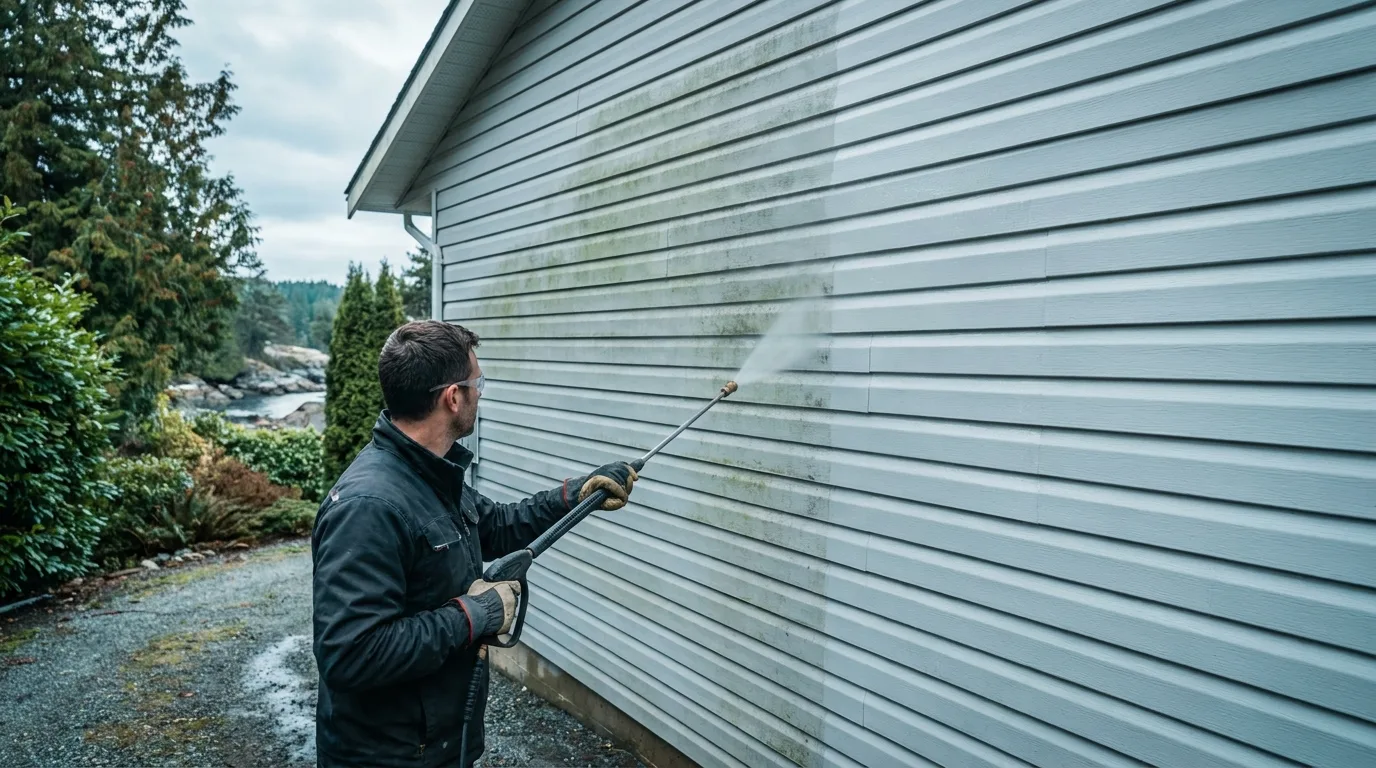
House Washing
A full soft wash of your home's exterior walls, soffits, fascia and trim, lifting algae, mildew, cobwebs and road film without forcing water behind the cladding.
Learn more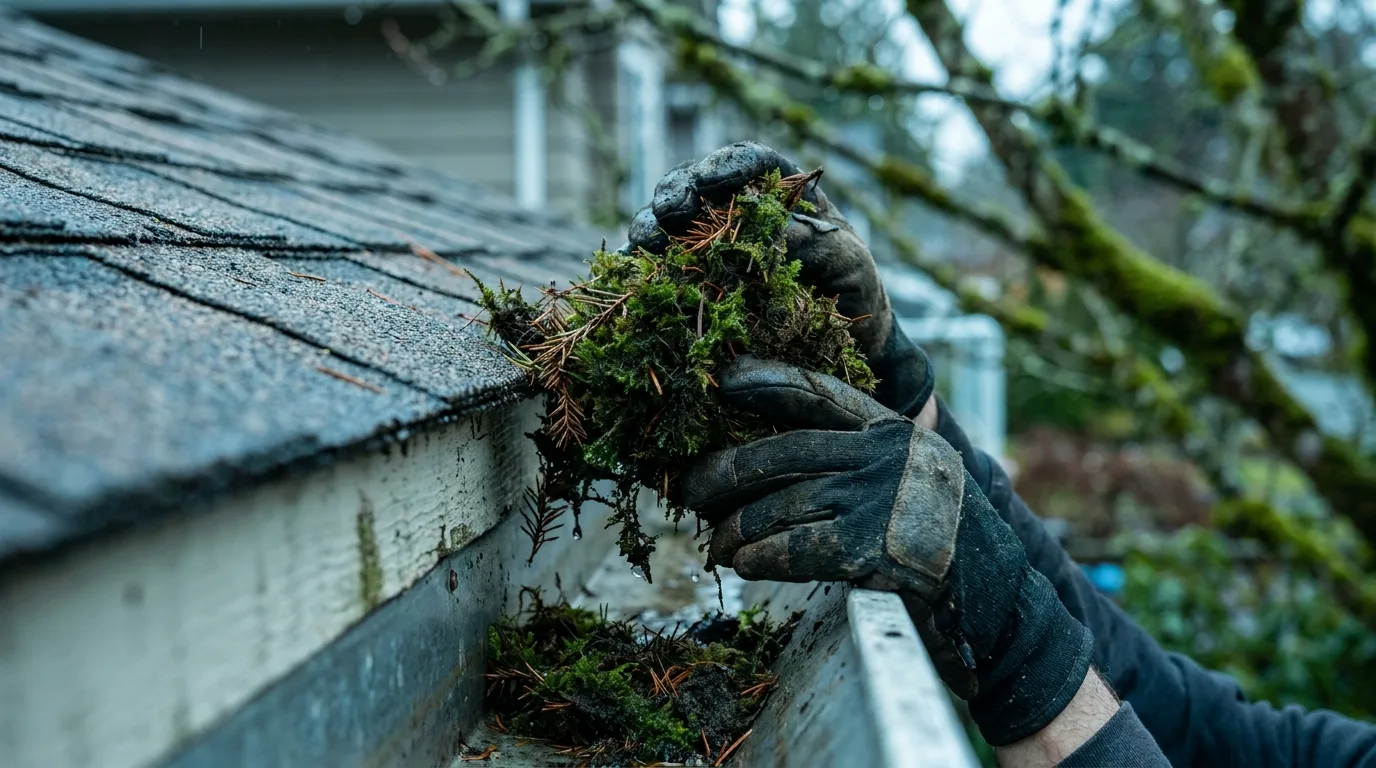
Gutter Cleaning
Hand clearing of gutter troughs, flushing of every downspout and outlet, and a flow check before we leave, so rainwater goes where it was designed to go.
Learn more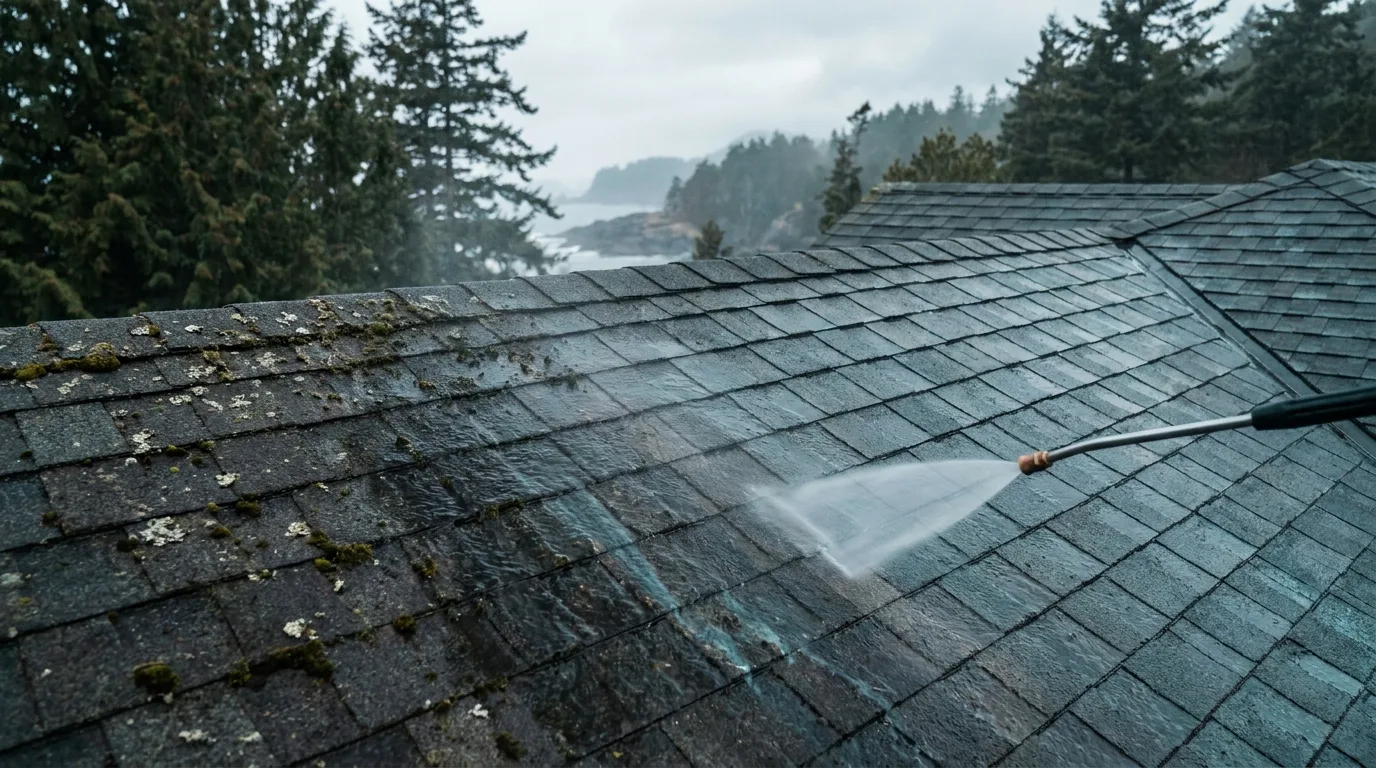
Roof Cleaning
A full low-pressure soft wash of your roof surface, clearing black algae streaking, lichen and years of general soiling without ever putting high pressure on the roofing.
Learn moreGet a Straight Price
Describe the job, get a number, decide from there. Nothing is added afterwards.